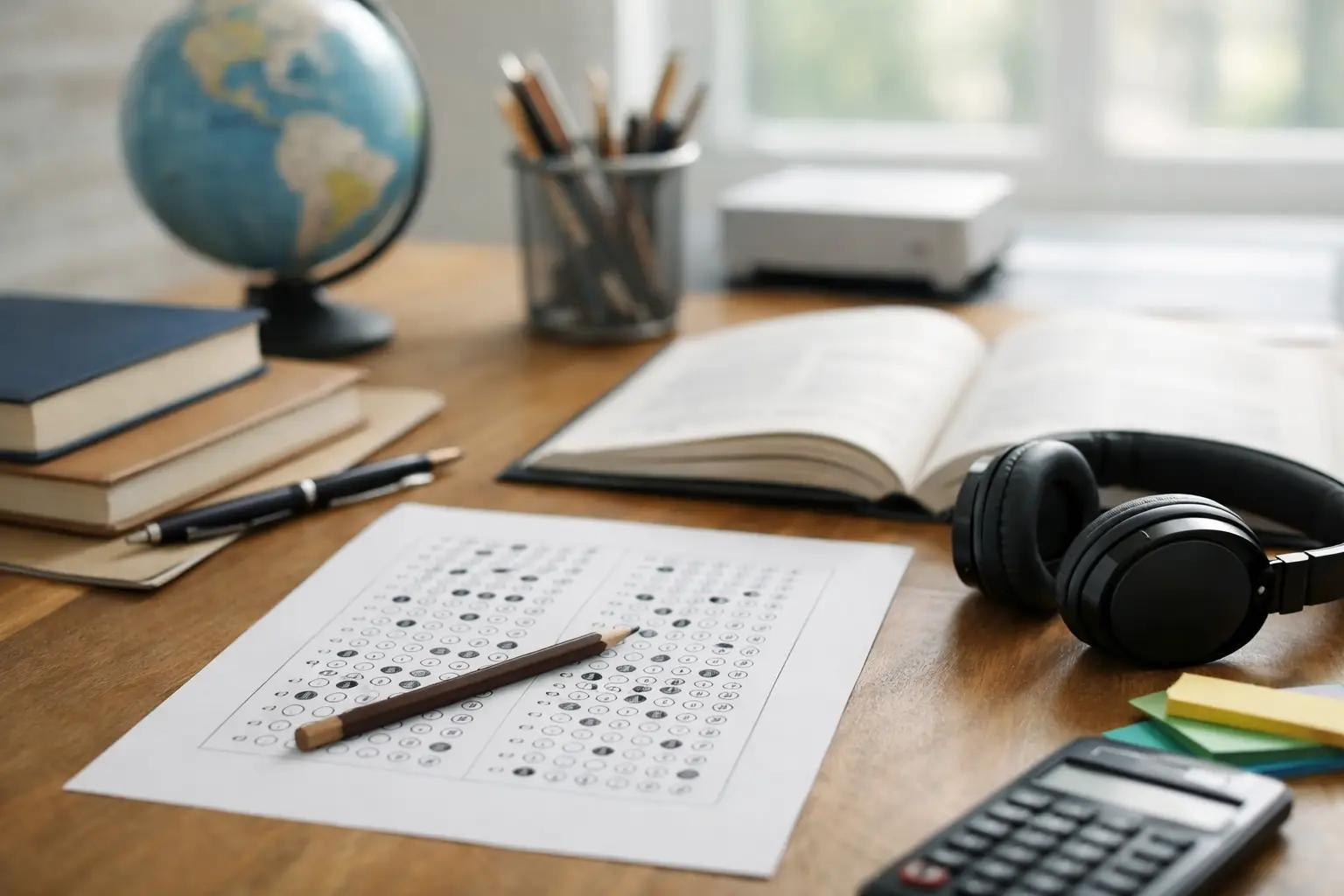
A lot of students only realize what the BECE really feels like when they sit for a mock. The room is quiet, the clock seems louder than usual, and small mistakes suddenly matter. That is why a good BECE mock exam preparation guide is not just about reading harder. It is about learning how to revise well, manage pressure, and turn mock results into a smarter plan before the real exam.
Mocks can help you, but only if you use them the right way. Some students treat them like a final judgment. Others do not take them seriously enough. The truth is somewhere in the middle. A mock exam is practice under pressure. It shows what you know, where you are weak, and how you respond when time is limited.
Why BECE mocks matter more than many students think
A mock exam is not simply a school tradition. It gives you feedback that normal classwork often cannot give. In class, you may answer questions with help from a teacher, a friend, or your notes. In a mock, you face the paper alone. That experience can reveal gaps in understanding, weak time management, and topics you thought you knew but cannot explain well.
Mocks also help reduce fear. Students are often anxious because the real BECE feels unknown. Once you have practiced the structure, timing, and pressure of an exam setting, the real paper feels more familiar. Familiarity does not remove every nerve, but it can make you steadier.
Still, mocks are not perfect predictors. A student can do poorly in a mock and improve greatly before the BECE. Another student can score high in a mock and become overconfident. That is why your response after the mock matters just as much as your score.
Start your BECE mock exam preparation guide with honesty
The best preparation starts with a simple question: what is actually slowing you down? For one student, it may be weak understanding in Mathematics. For another, it may be careless mistakes in Integrated Science. For someone else, the problem is not knowledge at all. It is panic, slow reading, or poor sleep.
Be honest without being harsh on yourself. Saying “I am bad at exams” does not help. Saying “I struggle to finish English Language comprehension on time” is better because it points to a real problem you can fix.
If you have old class tests, quizzes, or past mock papers, look at them closely. Notice patterns. Are you losing marks because you do not understand the topic, because you misread instructions, or because you leave questions unanswered? Different problems need different solutions.
Build a revision plan you can actually follow
Many students create revision timetables that look serious but are impossible to keep. They fill every hour of the day, ignore chores and fatigue, and collapse after two days. A useful plan should fit your real life.
Start with the subjects that need the most attention, but do not abandon the ones you already do well in. Strong subjects need maintenance. Weak subjects need more repair. A balanced week is usually better than focusing on one subject until you are tired of it.
Try working in short, focused blocks. Read a topic, solve questions on it, then check where you missed marks. This works better than reading notes again and again without testing yourself. Active practice helps your brain remember more.
If electricity, internet, or study space is a challenge, keep your method simple. Printed notes, exercise books, school textbooks, and group discussion with serious classmates can still be enough. Good preparation does not always require expensive materials. It requires consistency.
A smart weekly pattern
You do not need a perfect timetable. You need a repeatable one. For example, you might revise Mathematics and English on Monday, Science and Social Studies on Tuesday, then continue with weaker topics later in the week. Leave some space for review, not just new reading.
It also helps to plan one timed practice session every few days. That is where mock preparation becomes real. Reading is useful, but answering under time pressure is what trains exam performance.
Focus on understanding, not only memorizing
Some BECE topics require memory, but memory alone is risky. If a question is asked in a new way, students who memorized without understanding often struggle. Students who understand can adjust.
In Mathematics, do not only memorize steps. Know why a method works. In English Language, do not just learn likely essay topics. Practice organizing ideas clearly. In Science, connect concepts to real examples. In Social Studies, understand causes, effects, and relationships instead of only copying definitions.
A good sign of understanding is this: can you explain the topic to a friend in simple words? If not, you may need to study it again.
Practice like it is an exam day
One of the most helpful parts of any BECE mock exam preparation guide is learning how to practice under real conditions. Sit at a table. Put away distractions. Set the correct time. Use only the materials allowed. Then answer the paper fully.
This may feel uncomfortable at first, but that discomfort is useful. It trains concentration. It teaches pacing. It exposes habits that can hurt you in the exam hall, like spending too long on one question or rushing through instructions.
Afterward, mark your work if you have access to the answers, or ask a teacher, parent, older sibling, or serious study partner to help. Do not only look at your total score. Look at where you lost marks and why.
What to check after every practice paper
Ask yourself a few clear questions. Which topics came out often? Which questions took too much time? Did I leave anything blank? Did I make mistakes because I did not know the answer or because I was careless? That reflection is where improvement begins.
Learn from mock results without letting them define you
Some students feel ashamed after a poor mock result. That reaction is understandable, but it can waste valuable time. A mock is feedback, not fate.
If your score is low, resist the urge to say the paper was too hard and move on. Maybe it was hard, but there is still something to learn from it. Which sections pulled you down the most? Where did you perform better than expected? Even a weak result usually contains clues.
If your score is good, stay humble. Ask whether you truly know the material or whether the paper happened to favor your strengths. Strong mock performance is encouraging, but it should lead to steady revision, not relaxation.
Parents and teachers can help without adding pressure
Students often do better when adults around them are supportive, calm, and practical. Parents do not need to know every subject to be useful. They can help by protecting study time, reducing unnecessary errands, asking simple check-in questions, and encouraging healthy routines.
Teachers also play a big role after mocks. Beyond giving scores, they can help students understand common errors. A student who hears “work harder” may feel lost. A student who hears “your problem is interpreting word problems in Mathematics” now has a direction.
Pressure can motivate some learners, but too much pressure usually creates fear. Students need accountability, yes, but they also need confidence. Honest encouragement matters.
Do not ignore sleep, rest, and mindset
Late-night reading is common during exam season, but it is not always effective. If you are too tired to think clearly, the extra hours may not help. Sleep supports memory and concentration. Rest is part of preparation, not a reward after it.
Your mindset matters too. If you keep telling yourself that you will fail, even simple mistakes can shake you. A better approach is to think, “I still have work to do, but I am improving.” That is not empty motivation. It is a healthier way to stay focused.
Try not to compare your progress too much with other students. Someone may sound confident and still be struggling in silence. Stay with your plan. Adjust where needed. Keep going.
The final week before the mock or BECE
The last week is for sharpening, not panicking. Review key topics, formulas, definitions, and common question types. Practice a few timed questions, but do not overload yourself with too many new materials.
Prepare your items early. Sleep well the night before. On the exam day, read instructions carefully and manage your time. If a question feels difficult, move on and return later. One hard question should not steal marks from easier ones.
At KwikLearn, we believe students do best when preparation is clear, steady, and realistic. You do not need magic to improve before a mock or the BECE. You need honest review, consistent practice, and the courage to learn from mistakes. One good study session at a time can change how you walk into that exam room.