A teacher stands in front of 60 learners, with a chalkboard, a few notebooks, and no projector, no lab, and sometimes not even enough desks. That is exactly why teacher strategies for low resource classrooms matter so much. When materials are limited, teaching cannot depend on expensive tools. It has to depend on clear routines, creativity, strong relationships, and smart use of what is available.
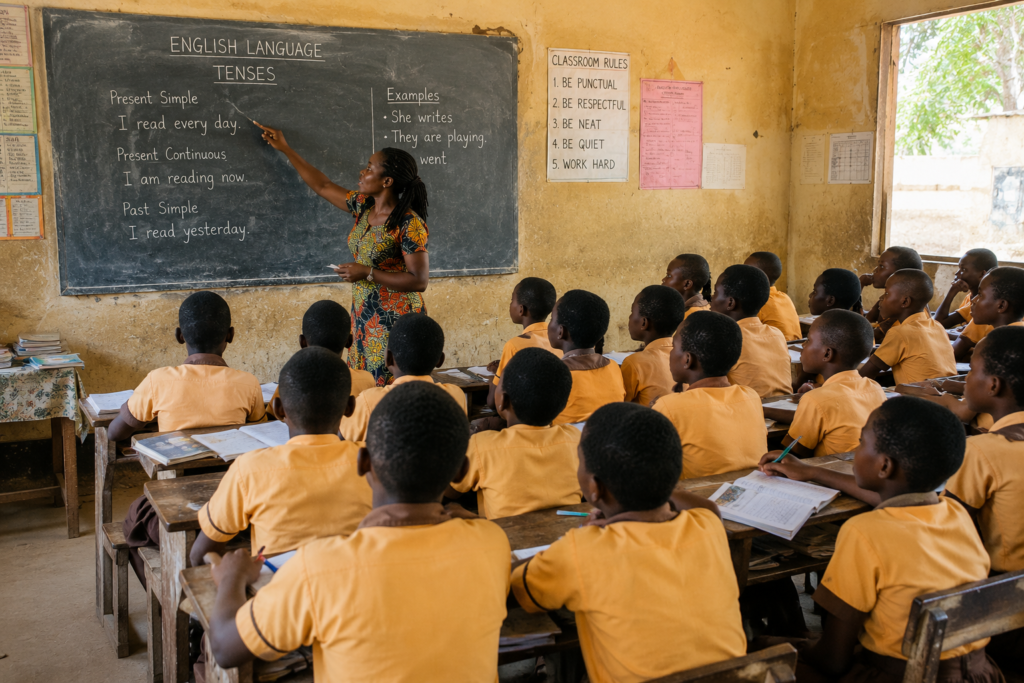
In many schools across Ghana and other underserved communities, low resources do not mean low potential. Learners can still build confidence, understand difficult topics, and prepare well for exams. But teachers need methods that work in real conditions, not ideas designed only for well-equipped classrooms. The good news is that effective teaching does not always start with money. It often starts with structure.
Why teacher strategies for low resource classrooms need a different approach
In a well-resourced school, a teacher may rely on printed worksheets, digital content, science equipment, or small class sizes. In a low resource classroom, those supports may not exist. That changes the way lessons must be planned.
The biggest challenge is not only the lack of materials. Many problems often happen together. A teacher may face large classes, mixed ability levels, irregular attendance, limited textbooks, little electricity, and exam pressure. A method that works in a small class may not work in a class of 70 learners sharing five books.
That is why practical teaching in these settings should focus on what can be repeated every day without stress. If a method depends on materials that are rarely available, it will be hard to sustain. If it saves time, keeps students engaged, and helps them remember content, it has real value.
Build lessons around routine, not resources
One of the strongest moves a teacher can make is to create a predictable lesson structure. Students learn better when they know what is coming. This also saves time, especially in crowded classrooms.
A simple pattern can work across many subjects: quick review, new concept, guided practice, student response, and recap. The exact timing may change, but the flow stays familiar. When students know that every lesson begins with two or three oral review questions, they settle faster. When they expect a recap before the bell, they listen for key ideas.
This matters even more when teaching time is disrupted. Rain, noise, late arrivals, or shared classroom spaces can break concentration. Routines help students focus again. They also make planning easier for the teacher.
Make local materials part of the learning
Teachers in low resource classrooms often do their best work when they stop waiting for perfect materials and start using familiar ones. Bottle tops can teach counting and grouping. Sticks can support measurement. Old cartons can become flashcards. Local markets, farms, transport, and weather can all become examples in lessons.
This is not about pretending shortages are fine. Students deserve proper learning materials. But while schools work toward better support, local examples make learning more concrete. A math problem about buying mangoes, rice, or exercise books is easier to picture than an abstract word problem with unfamiliar items. A science lesson on evaporation makes more sense when linked to drying clothes under the sun.
The trade-off is that homemade materials take time to prepare. Teachers already carry a heavy workload. So the smart approach is to choose reusable materials that can serve many lessons, not create something new every week.
Use the board more strategically
In classrooms with few textbooks, the chalkboard or whiteboard becomes very important. But writing too much can waste time. It can also leave students copying instead of thinking. Teachers should write only the most important points and use the rest of the time for explanation, questions, and practice.
It helps to divide the board with purpose. One section can hold lesson objectives in simple language. Another can show examples. A third can be used for student answers or summary points. Neat board work is not just about appearance. It improves pacing and reduces confusion, especially for younger learners or students who struggle to keep up.
Short notes are usually better than long paragraphs. If students must copy, let them copy only the most important information. The rest of the time should be spent explaining, questioning, and checking understanding.
Turn students into learning partners
When one teacher is supporting many learners, student participation is not optional. It is necessary. Pair work, peer explanation, choral response, and group discussion can keep more students active, even when materials are few.
This works best when the teacher gives very clear instructions. “Discuss with your partner” is often too vague. “Tell your partner one reason plants need sunlight” is clearer. In large classes, short and focused tasks are easier to manage than open-ended activities.
Peer support is especially useful in mixed-ability classrooms. A student who understands a concept can explain it in simpler language to a classmate. That helps both learners. Still, group work has limits. It can become noisy or uneven if stronger students do all the work. Teachers need to move around, listen in, and call on different groups for feedback.
Ask more questions than you answer
In low resource settings, questioning is one of the cheapest and strongest teaching tools. A good question checks understanding, wakes up a tired class, and shows the teacher where the gaps are.
Instead of asking only “Do you understand?” ask students to explain, compare, predict, or give an example. Instead of calling on the same confident hands, give thinking time, then invite answers from different parts of the room. Whole-class response can help shy learners join in, but individual responses are still important so the teacher can spot who is lost.
If students give wrong answers, that does not always mean failure. Sometimes it shows exactly where teaching should slow down. A classroom becomes stronger when mistakes are treated as part of learning, not as embarrassment.
Teach for mastery, especially in exam classes
In schools preparing students for BECE, WASSCE, or other major assessments, it is tempting to rush through the syllabus. But covering content is not the same as teaching it well. In low resource classrooms, weak foundations show up quickly.
Learners who cannot read instructions clearly will struggle across subjects. Weak understanding of place value can also cause continuing problems in math. Science definitions are easier to remember when students connect them to real examples.
That is why teachers should identify the high-impact concepts in each subject and return to them often. Repetition is not a sign of poor teaching. It is often the reason learning sticks. Oral quizzes, short written checks, recap games, and student summaries can all reinforce key knowledge without needing extra equipment.
Manage time and energy carefully
A low resource classroom can drain a teacher very quickly. There may be more marking, more noise, more interruptions, and more pressure to improvise. So part of effective teaching is protecting energy.
Not every lesson needs a new activity. Not every exercise needs full written marking. Sometimes sampling a few books, reviewing common errors on the board, or using peer checking can save time while still giving feedback. The goal is not perfection. The goal is consistent progress.
It also helps to prepare a small bank of go-to activities that work across topics. A quick recap quiz, think-pair-share, sentence completion, vocabulary drill, or board race can be used many times with small adjustments. Repetition in classroom routines often creates calm, not boredom.
Keep expectations high and messages hopeful
Students in under-resourced schools often receive a damaging message from society: because your school lacks facilities, your future will also be limited. Teachers can challenge that message every day.
High expectations do not mean ignoring hardship. They mean telling students the truth with hope. Yes, resources are limited. Yes, learning may take more effort. But improvement is possible, and effort still matters. Students are more likely to persist when they feel their teacher believes they can grow.
This is where encouragement becomes practical. Praise specific progress. Notice better handwriting, a stronger answer, improved attendance, or a student helping others learn. Motivation is not only speeches. It is the daily habit of showing learners that their work counts.
For schools and teachers serving communities with very little, the aim is not to copy expensive systems. It is to teach clearly, plan wisely, and make every available tool do real work. That is how classrooms with fewer materials can still produce strong thinkers, confident learners, and students who are ready for the next step.
https://www.unicef.org/flnhub/teacher-developmentTeachers can also explore UNICEF’s teacher development resources for more ideas on improving classroom learning and supporting students.